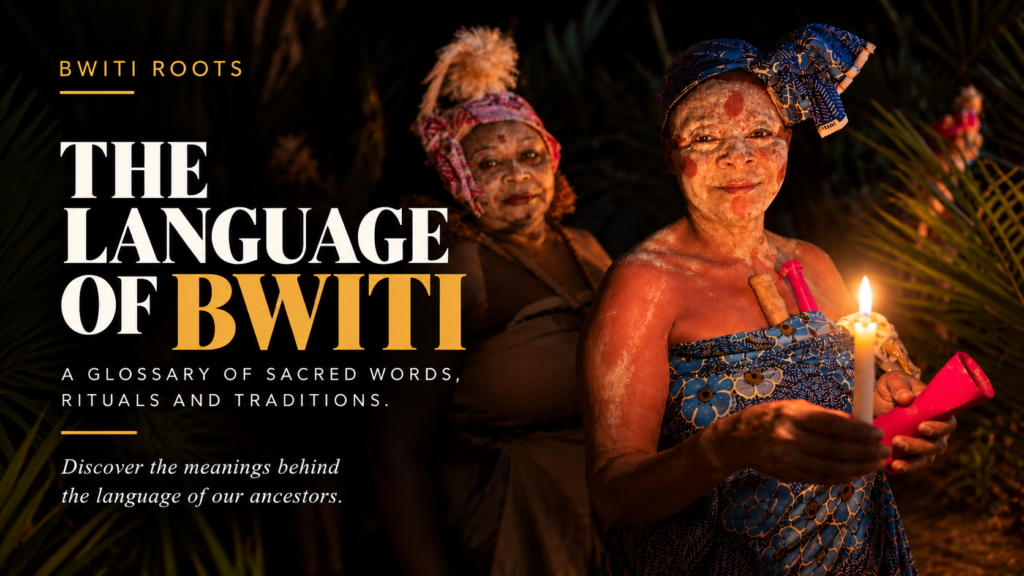
The Language of Bwiti: A Glossary of Sacred Words and Traditions
Discover the meaning and spiritual significance behind the ancestral language of Bwiti. The Sacred Language of Bwiti Bwiti is an ancestral spiritual tradition originating from the forests of Gabon, Central Africa. Passed down through generations, it carries a profound body of knowledge concerning the spirit world, our ancestors, nature, healing, life and death. As with many traditional initiatory societies, language holds a sacred place within Bwiti. Words are not simply a means of communication. They carry spiritual significance, ancestral knowledge and power. Certain words are spoken during ceremonies to invoke spirits, honour ancestors, express sacred truths or guide initiates through their spiritual journey. Their meaning often extends far beyond what can be translated into another language. Bwiti is practised by several ethnic groups in Gabon, including the Mitsogo, Fang and others. Over generations, different branches have developed their own ceremonial practices, expressions and interpretations. At Bwiti Roots, our tradition is rooted in the ancestral Fang lineage, passed down through generations of Nimas and Ngangas. Understanding the language of Bwiti offers a deeper insight into its spiritual teachings, symbolism and philosophy. This glossary introduces some of the important words and concepts found within the tradition. Banzi (Bandzi) – The Initiate A Banzi is someone who has undergone initiation into Bwiti. The word is associated with the idea of emerging from one’s shell, being liberated or discovering the truth. Initiation represents a profound spiritual transformation. Through the sacred rites of Bwiti, the Banzi undergoes a symbolic death and rebirth, leaving behind an old way of being and awakening to a deeper understanding of existence. The Banzi is considered a child of Bwiti, beginning a lifelong journey of spiritual learning and development. Corps de Garde – The Sacred Temple The Corps de Garde is the ceremonial temple where Bwiti rituals, initiations and spiritual gatherings take place. More than a physical structure, it is a sacred space connecting the living, the ancestors and the spiritual world. Its architecture, central pillars, sacred objects and ceremonial arrangements carry symbolic meanings. Within this space, initiates receive teachings, sacred music accompanies spiritual work, and the community gathers to honour the tradition. Different communities have their own names for the ceremonial temple, including Ebanza in Mitsogo and Abeigne or Nganza in Fang contexts. Bokayé – A Sacred Ceremonial Call Bokayé is a powerful ceremonial expression used within Bwiti. It is associated with the sacred breath, the invocation of spirits and the recognition of spiritual presence. In ceremonial practice, it may be called to command attention, establish silence and show respect for the spiritual forces being invoked. Within our tradition, Bokayé also forms part of the exchanges and responses heard during ceremony. It reminds us that words and breath are not separate from spiritual action. The spoken word carries intention and power. In the tradition, when somebody shouts: “Bokayé!”, everybody present must respond: “Aye” as a sign of attention. Bassé – Truth and Recognition Bassé is an expression associated with truth, authenticity and spiritual recognition. Within our ceremonial tradition, it is used to acknowledge what is true and to affirm the significance of what has been spoken or revealed. Truth is central to Bwiti teachings. Initiation is not simply about acquiring knowledge but about confronting oneself, removing illusions and discovering the truth of one’s existence. Bassé reflects the importance of recognising truth, both within ourselves and in the spiritual teachings passed down by our ancestors. Disumba (Dissumba) – The Ancestral Path Disumba is one of the principal traditional branches of Bwiti, particularly associated with ancestral worship, spiritual revelation and the mysteries of creation. Within Mitsogo traditions, Disumba is connected to the primordial female ancestor and is sometimes described as the Way of the Mother. Its teachings explore the origins of humanity, the relationship between life and death, and the connection between human beings and the spiritual world. Disumba places particular emphasis on initiation, ancestral knowledge and the mysteries revealed through sacred ceremonies. Its influence has also contributed to the development of other branches of Bwiti, including traditions practised among the Fang. Edika – Protection and the Completion of Initiation Edika is associated with the protective and concluding stages of initiation. Following the profound spiritual experiences of initiation, Edika represents an important moment of integration, protection and renewal. In certain Bwiti traditions, it involves the preparation and use of sacred plants and the ceremonial presentation of the newly initiated person to the community. It marks the transition from the intense initiatory experience into a new stage of life. The Banzi does not simply return to the world unchanged. They return carrying new responsibilities, spiritual knowledge and a renewed relationship with the ancestors. Iboga – The Sacred Plant of Revelation Iboga (Tabernanthe iboga) is a sacred plant native to the rainforests of Central Africa and lies at the heart of many Bwiti traditions. For generations, its root bark has been used within initiation ceremonies and spiritual practices. In Bwiti, Iboga is regarded as a sacred teacher, a powerful spiritual medicine and a means of accessing deeper truths. Through initiation, it helps individuals confront their past, connect with their ancestors, discover hidden aspects of themselves and gain insight into the spiritual nature of existence. Iboga is not simply understood as a plant that produces visions. Within the tradition, it is approached with reverence as a sacred intelligence that teaches according to the needs of the individual. Kombo – The Initiation Name Kombo refers to the sacred name received during initiation. Within Bwiti, this name is deeply significant. It is connected to the spiritual identity of the initiate, the guiding spirit revealed during their journey or an important truth discovered through initiation. Unlike an ordinary name given at birth, the Kombo represents something revealed through spiritual experience. It becomes part of the initiate’s identity within the tradition, carrying meaning that may continue to unfold throughout their spiritual life. Mabundi – Women’s Initiation and Sacred Dance Mabundi is associated with female initiation within the Misoko branch of Bwiti. The term may refer to initiated
The Language of Bwiti: A Glossary of Sacred Words and Traditions Read More »