admin

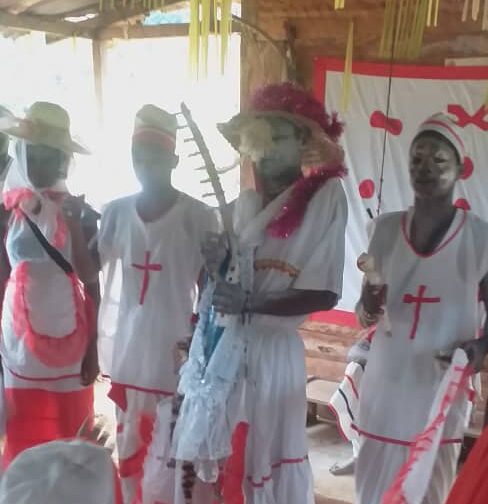
Bwiti Harp player at traditional Bwiti Iboga initiation ceremony in Gabon

Bwiti Iboga Initiation in Gabon – The 3 Key Stages

Nestled within the heart of Gabon, a country renowned for its cultural diversity and ancient traditions, lies the captivating and sacred practice of Bwiti Iboga initiation. Rooted in profound spiritual beliefs and rituals, this sacred ceremony takes the initiate, known as the “Bandzi,” on a transformative journey of self-discovery, purification, and reawakening. In this article, we delve into the intricate practice of the traditional Bwiti Iboga initiation, exploring its three stages and the profound significance they hold for those who dare to embark on this mystical path. I. The Practice of Bwiti Iboga Initiation In the mystical realm of Bwiti, the initiation process commences deep within the heart of the lush forest, where the Bandzi embarks on a series of sacred rituals. Cleansing, spiritual purification, and confession form the foundational steps of this transformative experience. Adorned with the sacred white kaolin, symbolizing purity and the spiritual realm, and the red kaolin, symbolizing earthly existence, the Bandzi is then gently guided to the temple, also known as the Bandja or Mbandja, to commence the Ngozé, a sacred and revered vigil. II. The Three Transformative Stages of Bwiti Iboga Initiation At the core of every initiatory journey lies the profound concept of death and rebirth. During the Bwiti Iboga initiation, the Bandzi is prepared to undergo a symbolic death, allowing the spirit to transcend the constraints of the physical realm. It is through the sacred consumption of roots from the revered Iboga plant that the spirit embarks on a profound and introspective voyage, seeking solutions and answers to life’s deepest questions. The Iboga, believed to hold the wisdom of ages, acts as a spiritual conduit guiding the Bandzi to an altered state of consciousness, where the boundaries of time and space blur. 2. The Journey Stage As the initiates gather around the flickering fire, the wise elders ceremoniously roast seeds, whose enchanting cracking sounds symbolize the departure of the spirit from the confines of the physical body. This ethereal departure is believed to occur through the sacred fontanel, opening the gateway to a mystical journey. The harmonious and mesmerizing sounds of the harp (Ngombi) and mouth bow (Mongongo) resonate through the atmosphere, enabling the Bandzi to attune themselves to the vibrant and ethereal messages of the divine breath. As they journey through the mystical realms, the Bandzi embraces profound experiences that transcend the limitations of the mundane world. 3. The Renaissance Stage Having traversed the astral plane and ventured deep into the realms of spiritual awakening, the Bandzi emerges from their introspective odyssey with a newfound identity, now known as the “Kombo.” This significant name, lovingly bestowed upon them by the unseen entities, serves as irrefutable proof of their passage through the intricate tapestry of time and space. The Kombo’s experiences encompass not only their personal memories but also the memories of their lineage and the collective memories of humanity. With profound reverence, the Bandzi shares their awe-inspiring experiences of the sacred lands of “Bwiti” with their master initiator, thus validating the authenticity and depth of their initiation. The Bwiti Iboga initiation in Gabon is a profound and sacred practice that offers a transformative and enlightening experience to those who dare to embark on this spiritual journey. Rooted in the ancient wisdom of Gabonese ancestors, this initiation process takes the Bandzi through three pivotal stages: the death, the journey, and the renaissance. Each stage holds profound spiritual significance, fostering a profound connection with the divine and their place within the vast cosmic order. As the Bandzi emerge from their transformative journey, they carry with them a renewed sense of purpose, clarity, and belonging. The practice of Bwiti Iboga initiation stands as a testament to the enduring power of ancient wisdom and the eternal quest for spiritual enlightenment. As the sacred rituals continue to be passed down through generations, the transformative journey of Bwiti Iboga initiation will remain a beacon of light for those seeking profound spiritual awakening and inner transformation in the heart of Gabon. At Bwiti Roots, our main priority is to preserve the Bwiti culture to ensure that it continues to exist for the generations to come. If you would like to support us, you can donate to our cause here. For more information, we recommend reading this article: “The Holy Spirit of Iboga and a Contemporary Perspective on Africa’s Spiritual Renaissance: Focus on Gabonese Bwiti Tradition“

Bwiti Iboga Initiation in Gabon – The 3 Key Stages Read More »

Bridging two worlds: Words from our co-founder on the interconnectedness of mind body and spirit in Gabonese Bwiti

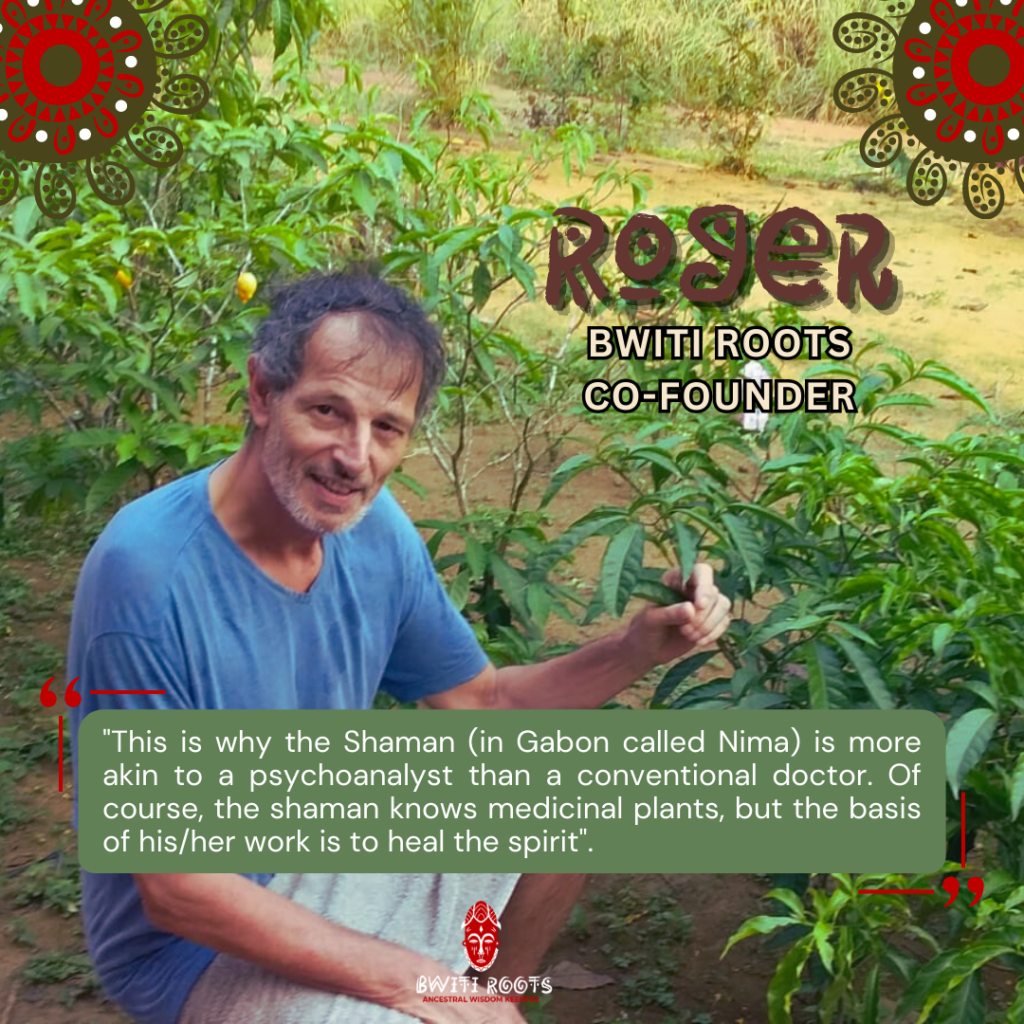
During his last Iboga retreat trip to Gabon, Roger, our co-founder felt inspired to document the Bwiti Shamanic process of healing a patient. Here is an excerpt from his memoirs (translated from french):  “The confrontation of 2 worlds with (apparently) nothing in common is a perilous exercise for the mind.  One of the solutions to this problem is the same as that used by the computer scientist in need of storage space: DELETE MEMORY. But don’t delete it permanently, or you’ll be lost in one of 2 worlds. Another solution is to build a bridge between these 2 worlds, so that you can move between them without losing your balance.  I’m currently going through the whole process of treating a patient in the authentic Bwiti ways. A process that will last about a month. I’m trying to understand each step, and like any good cartesian, I analyze, compare and interpret.  The basis for understanding is to be convinced that body and mind are one. There’s no point in treating them independently.  The 2nd thing to bear in mind is that the origin of the disease is always the same, despite different forms and names: bewitchment, evil spirit, spell, evil eye etc…. This is why the shaman (here called nima) is more akin to a psychoanalyst than a conventional doctor. Of course, the shaman knows medicinal plants, but the basis of his work is to heal the spirit.  The young man’s diagnosis was quickly stated: “an evil spirit had taken the form of a energetic snake to poison him. The first step is to eliminate the snake. A symbolic ceremony takes place in the bush near a river. The protective spirits are called upon and the snake’s death is symbolized. The patient then undergoes a period of isolation lasting 3 weeks, during which he or she follows a strict diet, purifying baths and devotes most of his or her time to confession (confession without witnesses). If everything is scrupulously and sincerely practiced, he will be in a state of purity to begin his initiation.  The iboga, the Bwiti harp , and all the participants in the ceremony will help him to meet the spirits who will deliver him in return for efforts and offerings.” To find out more about going on a traditional Bwiti Iboga retreat in Gabon in our village deep in the jungle, have a look at our retreats page. If you feel called to join us on a traditional initiation Iboga retreat in Gabon and to find out more about travel requirements from the UK, click here. French original version / Version Francaise : “J’ aime l’ expression ” avoir 2 cerveaux”, car si je n’en avais qu’ un , l’ explosion ( ou l’ implosion) serait inévitable. La confrontation de 2 mondes sans point commun (apparemment ) est pour l’ esprit un exercice périlleux. Une des solutions à ce problème est la même que celle utilisée par l’ informaticien en manque d’ espace de stockage : SUPPFIMER DE LA MEMOIRE. Mais surtout ne pas la supprimer définitivement sous peine d’ être perdu pour un de 2 mondes. Une autre solution consiste à établir un pont entre ces 2 mondes et pouvoir y circuler sans perdre l’ équilibre.  Je suis actuellement en train de suivre tout le processus du traitement d’ un malade. Processus qui durera environ un mois et j’ essaie de comprendre chaque étape et comme tout bon cartésien j’ analyse, je compare, j’ interprète.  La base pour un début de compréhension est d’ être convaincu que le corps et l’ esprit ne sont qu’ un. Inutile de les traiter indépendamment.  La 2ème chose est de bien prendre en compte que l’ origine de la maladie est toujours la même malgré des formes différentes, des noms différents: envoûtement, mauvais esprit, sortilège, fusil nocturne, serpent maléfique etc…. Voilà pourquoi la  chamane (appelée ici nima) s’ apparente plus à un psychanalyste qu’ à un médecin classique. Certes le/la chamane connaît les plantes médicinales mais la base de son travail est de soigner l’ esprit. Le diagnostic du jeune à été rapidement énoncé: ” un mauvais esprit ayant pris la forme d’ un serpent pour l’ empoisonner. La première étape consiste à éliminer ce serpent. Une cérémonie pleine de symboles à lieu en brousse près d’ une rivière. On fait appel aux esprits protecteurs et on symbolise la mort du serpent. Ensuite le malade subira une période d’ isolement de 3 semaines au cours de laquelle il suivra une diète stricte, des bains purificateur et consacrera la majeure partie de son temps à la confession ( confession sans témoin). Si tout est scrupuleusement et sincèrement pratiqué il sera dans un état de pureté pour débuter son initiation. L’iboga, la cithare, et l’ ensemble des participants à la cérémonie vont l’ aider à rencontrer les esprits qui vont le délivrer en contrepartie d’ efforts  et d’ offrandes.

Bridging two worlds: Words from our co-founder on the interconnectedness of mind body and spirit in Gabonese Bwiti Read More »

Exploiting Iboga: The Dark Side of the Pharmaceutical Industry

Exploiting Iboga: The Dark Side of the Pharmaceutical Industry In this article, we explore the troubling aspects of how the pharmaceutical industry exploits Iboga, including the scale of its exportation and the revenue generated, while overlooking the cultural heritage associated with this sacred plant. A natural cure for addiction = a threat to the Pharmaceutical Industry: Iboga, a sacred plant known for its remarkable healing properties, has gained recognition for its potential to combat addiction. This presents a unique challenge to the pharmaceutical industry, which rakes in billions from drugs like opioids that have contributed to the addiction crisis. Iboga’s ability to address addiction at its core, offering profound spiritual and psychological insights, poses a threat to the profit-driven model of pharmaceutical companies. Iboga’s power lies in its holistic approach to addiction recovery. Unlike conventional pharmaceutical interventions that often focus solely on symptom management, Iboga addresses addiction on multiple levels—physical, emotional, and spiritual. It activates a transformative journey within individuals, allowing them to confront the underlying causes of their addiction, gain deep insights into their patterns and behaviors, and experience profound shifts in their perception and relationship with substances. The pharmaceutical industry, heavily invested in the production and distribution of drugs like opioids, stands to lose significant revenue if Iboga’s potential as an addiction treatment becomes widely recognized. While opioids and other addictive substances generate massive profits, they also perpetuate a cycle of dependency, leading to devastating social and health consequences. Iboga, on the other hand, offers a natural and sustainable alternative, breaking the chains of addiction and empowering individuals to reclaim their lives. Moreover, Iboga’s approach challenges the pharmaceutical industry’s reliance on long-term medication-based treatments. By facilitating intense introspection, emotional healing, and spiritual awakening, Iboga can provide individuals with the tools to overcome addiction without a lifetime dependence on pharmaceutical interventions. This shift towards sustainable and transformative solutions threatens the pharmaceutical industry’s recurring revenue streams and disrupts the status quo. However, despite its potential, Iboga faces numerous hurdles on its path to mainstream acceptance. The pharmaceutical industry’s influence and vested interests, combined with regulatory barriers and limited research funding, contribute to the underutilization and even suppression of Iboga’s therapeutic potential. This suppression not only denies individuals access to a potentially life-changing treatment but also perpetuates the profitability of pharmaceutical companies at the expense of public health. It is crucial to recognize the immense value of Iboga in addiction recovery and advocate for its integration into mainstream healthcare systems. By embracing Iboga’s natural healing potential and challenging the profit-driven approach of the pharmaceutical industry, we can offer individuals struggling with addiction a genuine opportunity for transformation and liberation. Cultural Appropriation: Iboga holds deep spiritual and cultural significance within the Bwiti people of Central Africa, who have utilized it as a sacred plant medicine for centuries. However, the pharmaceutical industry’s extraction of active compounds from Iboga without acknowledging or respecting the cultural heritage surrounding it can be seen as a form of cultural appropriation, stripping away the wisdom and rituals that have been preserved through generations. Scale of Exportation: The demand for Iboga by the pharmaceutical industry is significant. Large quantities of Iboga are exported from regions where it naturally grows, primarily in Gaboin. The extraction and processing of Iboga to isolate specific alkaloids required for pharmaceutical purposes often involve extensive harvesting, potentially leading to overexploitation and environmental degradation. Revenue Generation: While specific figures on revenue earned solely from Iboga are challenging to ascertain due to the lack of transparency in the industry, the overall revenue generated by pharmaceutical companies from plant-based medicines is substantial. According to estimates, the global market for plant-based pharmaceuticals was valued at approximately $28.4 billion in 2020. It is reasonable to assume that a portion of this revenue can be attributed to Iboga-derived compounds and products. Neglecting Sustainable Practices: Iboga is a slow-growing plant that requires careful cultivation and sustainable harvesting practices to ensure its long-term survival. However, the profit-driven focus of the pharmaceutical industry often overlooks sustainable practices. Mass production and extraction without implementing strategies for replanting and conservation can lead to the depletion of Iboga populations and habitat destruction, threatening its existence and the delicate ecological balance it contributes to. Patenting Natural Compounds: Pharmaceutical companies have attempted to patent specific alkaloids found in Iboga, aiming to capitalize on its therapeutic potential. By doing so, they not only restrict access to these compounds but also exploit the knowledge and traditional use of the plant by indigenous communities. This approach undermines the communal nature of traditional medicine and disregards the intellectual property rights of those who have nurtured and preserved the wisdom of Iboga for generations. Profit-driven Research: The pharmaceutical industry’s interest in Iboga primarily revolves around isolating and synthesizing its active compounds for commercial drug development. This profit-driven research often focuses on individual chemical constituents rather than recognizing the holistic nature of Iboga as a plant medicine. By isolating and patenting specific compounds, the potential benefits derived from the synergistic effects of the entire plant may be overlooked or understated. Lack of Regulatory Oversight: The exploitation of Iboga by the pharmaceutical industry highlights the need for robust regulatory oversight concerning the ethical use of traditional plant medicines. Current regulatory frameworks often prioritize profit-driven approaches, neglecting the cultural, spiritual, and ecological dimensions associated with plant medicines. Comprehensive regulations are necessary to protect the rights of indigenous communities, preserve traditional knowledge, and promote sustainable practices in line with the principles of ecological balance. The pharmaceutical industry’s exploitation of Iboga raises significant ethical concerns. Large-scale exportation of Iboga, coupled with the substantial revenue generated from its derived compounds, underscores the need for responsible and sustainable practices. By acknowledging and respecting the cultural and spiritual significance of sacred plant medicines, implementing transparent regulations, and fostering collaboration with indigenous communities, we can preserve the integrity of traditional plant medicines, honor ancestral wisdom, and ensure a sustainable future for Iboga and the communities that hold it sacred.

Exploiting Iboga: The Dark Side of the Pharmaceutical Industry Read More »

10 Reasons Why Iboga Differs from Ibogaine

Iboga and ibogaine are two distinct substances that often cause confusion due to their similar names and shared origin. While both are derived from the iboga plant, Tabernanthe iboga, they possess distinct characteristics and effects. In this article, we will explore ten key reasons why Iboga and ibogaine differ from each other, helping to shed light on their unique properties and applications. While iboga and ibogaine share a common origin, they possess distinct properties, effects, and applications. Iboga, as a whole plant, encompasses a broader range of alkaloids and embodies cultural, spiritual, and holistic traditions. Ibogaine, as an isolated

10 Reasons Why Iboga Differs from Ibogaine Read More »

Embracing the Call: How to Recognize if Iboga is Calling You

Iboga, a sacred plant with profound spiritual and healing properties, has the power to call individuals to embark on a transformative journey. If you find yourself drawn to the wisdom and potential of Iboga, it is essential to explore and discern whether the plant is truly calling you. In this article, we will discuss several key signs that may indicate Iboga is calling you and inviting you to embark on a transformative path of self-discovery and healing. Conclusion: Recognizing the call of Iboga requires attunement to your inner longings, synchronicities, and signs from the universe. If you feel a deep resonance, a yearning for personal growth, emotional healing, or a connection to ancestral wisdom, Iboga may be calling you to embark on a transformative journey. Listen to your intuition, conduct thorough research, and seek guidance from experienced practitioners to ensure a safe and supportive exploration of Iboga’s profound potential. Embracing the call of Iboga can lead to a powerful path of self-discovery, healing, and spiritual growth.

Embracing the Call: How to Recognize if Iboga is Calling You Read More »

Embarking on a Transformative Journey: Bwiti Initiation Ceremony in Gabon

The Bwiti initiation ceremony is a profound and transformative rite of passage, rooted in the rich cultural heritage of Gabon. For those seeking a powerful and authentic spiritual experience, embarking on a Bwiti initiation in Gabon offers a unique opportunity to connect with ancient wisdom, explore the depths of one’s being, and forge a deep connection with the Bwiti community and the ancestral realm. Unveiling the Bwiti Initiation: The Bwiti initiation ceremony is a deeply sacred and immersive experience that spans approximately 10 days. It marks a significant transition from one stage of life to another, symbolizing personal growth, spiritual awakening, and the quest for ancestral knowledge and wisdom. During this transformative journey, initiates consume a flood dose of Iboga, a sacred plant known for its profound visionary and introspective effects. Guided by Experienced Bwiti Practitioners: Throughout the initiation process, initiates are guided by experienced traditional Bwiti practitioners known as Nimas. These wise and knowledgeable individuals play a vital role in providing support, guidance, and spiritual insight to help navigate the intense and introspective Iboga experience. Drawing from their ancestral lineage, the Nimas create a safe and sacred space for initiates to explore the depths of their consciousness and connect with the spiritual realm. Connecting with Ancestral Wisdom: At the core of the Bwiti initiation ceremony lies the opportunity to connect with the ancestors and gain profound insights and wisdom from the spiritual realm. The Iboga experience often unveils deeply personal and transformative revelations, leading initiates on a journey of self-discovery, emotional healing, and spiritual growth. Through this connection, initiates tap into the collective consciousness of their lineage, bridging the gap between past, present, and future. The Authentic Gabonese Experience: Gabon, with its pristine jungles and remote villages, serves as the backdrop for an authentic Bwiti initiation experience. The ceremonies take place in villages such as Ntan, nestled deep within the Gabonese jungle. While the facilities are simple and in tune with traditional Gabonese ways, they contribute to the raw and powerful nature of the journey. Living as the locals do during this time fosters a profound sense of authenticity and connection to the land, culture, and community. Preparation and Integration: Prior to the initiation ceremony, participants undergo a period of preparation that includes fasting, purification rituals, and other practices aimed at aligning the mind, body, and spirit. After the ceremony concludes, initiates are considered members of the Bwiti community and are encouraged to integrate their experiences into their daily lives. Ongoing participation in communal rituals and the responsible use of Iboga for spiritual and medicinal purposes become part of their lifelong journey. Conclusion: Undertaking a Bwiti initiation ceremony in Gabon is a transformative and profound experience that opens the doors to ancestral wisdom, spiritual growth, and self-discovery. Through the guidance of experienced practitioners and the power of Iboga, participants embark on a journey of deep introspection, healing, and connection with the Bwiti community and the spiritual realm. The authenticity and power of the Gabonese landscape and culture enhance the transformative nature of this sacred initiation, leaving a lasting impact on the lives of those who dare to embark on this profound journey of self-realization.

Embarking on a Transformative Journey: Bwiti Initiation Ceremony in Gabon Read More »